CTET SUCCESS

Uncategorized

BPSC TRE Polity 25 Important Questions MCQs #bpsc #biharteacher #bpscteacher #shikshakbahali

भारतीय राजव्यवस्था के लिए  कक्षा 11 और 12 के लिए BPSC TRE परीक्षा की तैयारी के लिए महत्वपूर्ण बहुविकल्पीय प्रश्न: Important MCQs for BPSC TRE Polity 11 & 12     1) निम्नलिखित में से कौन राष्ट्रपति की प्रसन्नता पर पद धारण करता है?   a) राज्यपाल b) मुख्य निर्वाचन आयुक्त c) नियंत्रक और महालेखा परीक्षक d) संघ लोक सेवा आयोग के अध्यक्ष   उत्तर:  प्रश्न 14 के बाद देखे   2) संसद अंतर्राष्ट्रीय संधियों को लागू करने के लिए भारत के किसी भी भाग के लिए कोई भी कानून बना सकती है, इसके लिए किसकी स्वीकृति आवश्यक है?   a) लोक सभा b) राज्य सभा c) प्रधानमंत्री d) राष्ट्रपति     उत्तर: प्रश्न 14 के बाद देखे   3) भारतीय संविधान की मसौदा समिति के अध्यक्ष कौन थे?   a) डॉ बीआर अम्बेडकर  b) डॉ राजेंद्र प्रसाद c) जवाहरलाल नेहरू   d) वल्लभभाई पटेल Must Read very impoprtant for CTET उत्तर: प्रश्न 14 के बाद देखे   4) भारतीय संविधान की कौन सी अनुसूची में विधानसभा अपराधों से संबंधित प्रावधान हैं?   a) नौवीं अनुसूची   b) दसवीं अनुसूची c) बारहवीं अनुसूची d) चौथी अनुसूची   उत्तर: प्रश्न 14 के बाद देखे   5) भारत के महान्यायवादी का कार्यकाल कितना है?   a) 4 वर्ष b) निश्चित नहीं   c) 6 वर्ष d) राष्ट्रपति की प्रसन्नता के दौरान   उत्तर: प्रश्न 14 के बाद देखे भारतीय राजव्यवस्था Indian Polity पर और बहुविकल्पीय प्रश्न BPSC TRE परीक्षा के लिए: 6) भारत में केंद्र और राज्यों के बीच विवादों के मामले में ‘ऐंपायर’ के रूप में कौन कार्य करता है?   a) राष्ट्रपति b) प्रधानमंत्री   c) सर्वोच्च न्यायालय d) चुनाव आयोग   उत्तर: प्रश्न 14 के बाद देखे   7) भारतीय संविधान की किस अनुसूची में केंद्र, राज्य और समवर्ती सूची दी गई है?   a) अनुसूची 5 b) अनुसूची 6 c) अनुसूची 7   d) अनुसूची 8   उत्तर: प्रश्न 14 के बाद देखे   8) भारतीय संविधान की 7वीं अनुसूची में संघ सूची के अंतर्गत निम्नलिखित में से कौन सा आता है?   a) पुलिस b) कृषि c) भूमि राजस्व d) कारागार   उत्तर: प्रश्न 14 के बाद देखे   9) ‘न्यायिक समीक्षा’ शब्द न्यायपालिका की इस शक्ति का संदर्भ है:   a) मंत्रियों के कार्यकाल की समीक्षा करना  b) राष्ट्रपति को सलाह देना c) संविधान की आवधिक समीक्षा करना d) कानूनों की संवैधानिक वैधता की जाँच करना   उत्तर: प्रश्न 14 के बाद देखे     10) भारतीय संविधान के अंतर्गत निम्नलिखित में से कौन सा एक मौलिक अधिकार नहीं है?   a) संवैधानिक उपचार का अधिकार b) धर्म की स्वतंत्रता का अधिकार c) संपत्ति का अधिकार d) समानता का अधिकार   उत्तर: प्रश्न 14 के बाद देखे भारतीय राजव्यवस्था Indian Polity पर और बहुविकल्पीय प्रश्न BPSC TRE परीक्षा के लिए: 11) संसदीय शासन प्रणाली में कार्यपालिका किसके अधीन होती है?   a) राष्ट्रपति  b) प्रधानमंत्री c) न्यायपालिका d) विधायिका   उत्तर: प्रश्न 14 के बाद देखे   12) भारत के मूल कर्तव्यों में निम्नलिखित में से कौन सा शामिल नहीं है?    a) धर्मनिरपेक्षता का पालन करना b) न्याय की समानता की गारंटी देना c) पैतृक संपत्ति देना d) किसी भी प्रकार के भेदभाव का उन्मूलन करना   उत्तर: प्रश्न 14 के बाद देखे   13) भारत में मूल कर्तव्यों को परिभाषित किया गया है:   a) अनुच्छेद 14 में b) अनुच्छेद 51 में c) अनुच्छेद 32 में d) भाग 4 में    उत्तर: प्रश्न 14 के बाद देखे   14) राष्ट्रपति द्वारा घोषित आपातकाल की अवधि कितने महीने तक के लिए हो सकती है?   a) 1 माह b) 2 माह c) 6 माह d) 12 माह   उत्तर:  प्रश्न 14 के बाद देखे प्रश्न 1 से 25 के उत्तर      1.  a)  राज्यपाल  2.  b)  राष्ट्रपति 3.  a) डॉ बीआर अम्बेडकर 4.  b) दसवीं अनुसूची 5.  b) निश्चित नहीं 6.  c) सर्वोच्च न्यायालय 7.  c) अनुसूची 7   8.  d) कारागार 9.  d) कानूनों की संवैधानिक वैधता की जाँच करना 10.  c) संपत्ति का अधिकार 11.  d) विधायिका 12.  c) पैतृक संपत्ति देना 13.  d) भाग 4 में  14.  c) 6 माह  15. d) उपरोक्त सभी  16.  d) 1950  17.  b) 28  18.  c) उच्चतम न्यायालय के मुख्य न्यायाधीश  19.  b) दो  20.  c) 6 महीने  21.  c) संसद और विधानसभा सदस्यों द्वारा  22.  b) राष्ट्रपति 23.  d) राष्ट्रपति 24.  c) केंद्रीय कैबिनेट 25.  c) नागरिकता    भारतीय राजव्यवस्था के लिए कक्षा 11 और 12 के लिए BPSC TRE परीक्षा की तैयारी के लिए महत्वपूर्ण बहुविकल्पीय प्रश्न: Important MCQs for BPSC TRE Polity 11 & 12   15) भारत में नागरिकता किस आधार पर प्रदान की जाती है?   a) जन्म के आधार पर b) माता-पिता के आधार पर c) निवास के आधार पर d) उपरोक्त सभी   उत्तर: प्रश्न 14 के बाद देखे       16) भारत का संविधान किस वर्ष लागू हुआ था?   a) 1947 b) 1948 c) 1949 d) 1950   उत्तर: प्रश्न 14 के बाद देखे   17) भारत में कुल राज्यों की संख्या कितनी है?    a) 24 b) 28  c) 30  d)32   उत्तर: प्रश्न 14 के बाद देखे   18) भारत का मुख्य निर्वाचन आयुक्त किसकी सिफारिश पर नियुक्त होता है?   a) प्रधानमंत्री b) राष्ट्रपति c) उच्चतम न्यायालय के मुख्य न्यायाधीश  d) लोकसभा अध्यक्ष   उत्तर: प्रश्न 14 के बाद देखे   19) भारत में कितने प्रकार के आपातकाल हैं?   a) तीन b) दो c) एक d) चार   उत्तर: प्रश्न 14 के बाद देखे  भारतीय राजव्यवस्था Indian Polity पर और बहुविकल्पीय प्रश्न BPSC TRE परीक्षा के लिए: 20) भारत में संसद सत्र आमतौर पर कितने महीने में एक बार बुलाया जाता है?   a) 4 महीने b) 5 महीने c) 6 महीने  d) 8 महीने   उत्तर: प्रश्न 14 के बाद देखे   21) राष्ट्रपति के चुनाव के लिए चुनावी कॉलेज का गठन किस प्रकार किया जाता है?    a) संसद सदस्यों द्वारा b) राज्य विधानसभा सदस्यों द्वारा c) संसद और विधानसभा सदस्यों द्वारा d) केवल राज्यसभा सदस्यों द्वारा   उत्तर: प्रश्न 14 के बाद देखे   22) रिजर्व बैंक के गवर्नर की नियुक्ति कौन करता है?   a) प्रधानमंत्री  b) राष्ट्रपति c) वित्त मंत्री d) संसद  
BPSC TRE Polity 25 Important Questions MCQs #bpsc #biharteacher #bpscteacher #shikshakbahali Read More »

CTET CDP Previous Year Question #ctet #ctet2024 #ctetresult

    CTET CDP Important Question With Answer in Hindi  CDP Questions For CTET in Hindi   —––——–———-–——————–     1. बालकेन्द्रित शिक्षाशास्त्र का अर्थ है –A. बच्चों को नैतिक शिक्षा देना B. बच्चों को शिक्षक का अनुमान और अनुकरण करने के लिए C. बच्चों को अभिव्यक्ति और उनकी सक्रिय भागीदार को महत्व देना D. बच्चों को पूर्ण रूप से स्वतंत्रता देना 2. मानव बुद्धि एवं विकास की समक्ष शिक्षक को —के योग्य बनाती है। A. निष्पक्ष रूप से अपने शिक्षण – अभ्यास B. शिक्षण के समय शिक्षार्थियों के संवेगों पर नियंत्रण बनाए रखने C. विविध शिक्षार्थियों के शिक्षण के बारे में स्पष्टता D. शिक्षार्थियों को यह बनाने कि वे अपने जीवन में कैसे सुधार कर सकते, है। 3. ” सीखने का वह मॉडल ” जो बच्चों की सृजनात्मकता को उत्प्रेरित करता है :A. बैंकिग मॉडल B. रचनावादी मॉडल C. प्रोग्रामिंग मॉडल D. उपरोक्त में से कोई नहीं 4. प्राथमिक स्तर पर एक शिक्षक में निम्न में से किसे सबसे महत्वपूर्ण विशेषता मानना चाहिए ?A. धैर्य और दृढ़ता B. शिक्षण – पद्धतियों और विषयों के ज्ञान में दक्षता C. अति मानक भाषा में पढ़ाने में दक्षता D. पढ़ाने की उत्सुकता 5. आपकी कक्षा में एक बच्चा रोज आपको परेशान करने के लिए अप्रासंगिक प्रश्न पूछता है। आप क्या करेंगे ?A. प्रधानाचार्य से शिकायत करेंगे B. उसे डाँटेंगेC. उससे बातचीत करेंगे D. उसके माता – पिता से शिकायत करेंगे 6. ‘ खेल शिक्षण विधि ‘ के प्रतिपादक कौन हैं ?A. सुकरात B. फ्रोबेल C. किलपैट्रिक D. अरस्तु 7. शिक्षक को ज्ञान होना चाहिए –A. अध्यापन विषय का B. बाल मनोविज्ञान का C. शिक्षा संहिता का D. अध्यापन विषय एवं बाल – मनोविज्ञान का 8. प्राथमिक कक्षा के बालकों के लिए शिक्षण की उपयुक्त विधि है A. प्रयास व भूल विधि B. अनुकरण विधि C. व्याख्यान विधि D. खेल विधि 9. डॉल्टन शिक्षण विधि का विकास किसने किया ?A. फ्रोबेल B. डब्ल्यू एच किलपैट्रिक C. मिस हेलन पार्कहर्स्ट D. डॉल्टन 10. आधुनिक शिक्षण अधिगम  प्रक्रिया में शिक्षक की भूमिका है –A. सीखने हेतु एक अच्छे सुलभकर्ता की B. बच्चों को गणित, विज्ञान और भाषा सिखाने की C. बच्चों को मूल्य आधारित शिक्षा देने की D. बच्चों को सभी कुछ पढ़ाने की        CTET Important Question With Answer in Hindi CDP Questions For CTET in Hindi      1. Meaning of “Balakendrit Shikshashastra” is –      A. Providing moral education to children    B. Estimating and imitating teachers for children    C. Giving importance to expression and active participation of children    D. Granting complete freedom to children       2. Human intellect and development make the teacher competent in —      A. Impartially practicing their teaching methods    B. Controlling the emotions of students during teaching    C. Providing clarity about teaching various students    D. Making students capable of improving their lives       3. The “learning model” that inspires children’s creativity:      A. Banking Model    B. Creative Model    C. Programming Model    D. None of the above       4. At the primary level, the most important attribute in a teacher should be:      A. Patience and perseverance    B. Expertise in teaching methods and subjects    C. Proficiency in teaching in a standardized language    D. Enthusiasm for teaching       5. A child in your class regularly asks inappropriate questions to disturb you. What will you do?      A. Complain to the principal    B. Scold him    C. Have a conversation with him    D. Complain to his parents       6. Who is the proponent of the ‘Play Way Method’?      A. Socrates    B. Froebel    C. Kilpatrick    D. Aristotle       7. The teacher should have knowledge of:      A. The subject being taught    B. Child Psychology    C. Education Code    D. Both the subject being taught and Child Psychology       8. An appropriate method of teaching for primary school children is:      A. Trial and error method    B. Imitation method    C. Lecture method    D. Play method       9. Who developed the Dalton Plan teaching method?      A. Froebel    B. W. H. Kilpatrick    C. Miss Helen Parkhurst    D. Dalton       10. In the modern process of learning acquisition, the teacher’s role is to:       A. Be a good facilitator for learning     B. Teach children math, science, and language     C. Provide values-based education to children     D. Teach children everything.             Answer :-    Ans – C Ans – C Ans – B Ans – A Ans – C Ans – B Ans – D Ans – D Ans – C Ans – A  

CTET CDP Previous Year Question #ctet #ctet2024 #ctetresult Read More »

CDP ANSWER PART 1 CTET2024

 CTET Part 1 MCQ Answer CTET CDP MCQ QUESTION HERE Here are the compiled answers with options: Q1. What is the primary focus of child development?    Answer: d) All of the above Q2. According to Piaget’s theory, at what stage does a child develop object permanence?      Answer: a) Sensorimotor Q3. Who proposed the Social Learning Theory?     Answer: c) Albert Bandura Q4. What does the acronym IQ stand for in the context of intelligence testing?     Answer: a) Intelligence Quotient Q5. In Vygotsky’s Zone of Proximal Development (ZPD), what does the ‘proximal’ refer to?     Answer: a) Near Q6. Kohlberg is best known for his theory of:     Answer: a) Moral development CTET CDP MCQ QUESTION HERE Q7. Which of the following is NOT a stage in Erikson’s psychosocial development theory?     Answer: d) Isolation vs. Independence Q8. What is the term for learning by associating a conditioned stimulus with an unconditioned stimulus?    Answer: b) Classical conditioning Q9. Who proposed the stages of cognitive development in children, including the stages of sensorimotor and preoperational?     Answer: b) Jean Piaget Q10. Which learning style emphasizes hands-on experiences and experimentation?      Answer: c) Kinesthetic Q11. According to Maslow’s Hierarchy of Needs, what is the highest level of need?      Answer: d) Self-actualization Q12. What is the main focus of the nativist theory of language development?      Answer: b) Biological factors Q13. Which theorist is associated with the concept of scaffolding in learning?      Answer: d) Lev Vygotsky Q14. What is the key concept in Howard Gardner’s theory of multiple intelligences?      Answer: c) Spatial intelligence CTET CDP MCQ QUESTION HERE Q15. According to B.F. Skinner, learning is a result of:      Answer: b) Reinforcements Q16. What is the term for adjusting existing schemas to incorporate new information?      Answer: a) Accommodation Q17. Who proposed the theory of psychosocial development, emphasizing the importance of social relationships throughout life?      Answer: b) Erik Erikson Q18. Which of the following is a characteristic of authoritative parenting style?      Answer: c) High demand, high responsiveness Q19. What is the main focus of behaviorism in the context of learning?      Answer: b) Environmental stimuli and responses Q20. What is the term for the mental frameworks that shape and are shaped by our experiences?      Answer: a) Schemas Q21. According to Bandura’s Social Learning Theory, what plays a crucial role in learning?      Answer: c) Observation and imitation CTET CDP MCQ QUESTION HERE Q22. In the context of Piaget’s stages of cognitive development, what characterizes the formal operational stage?      Answer: a) Logical reasoning and abstract thinking Q23. According to Kohlberg’s theory, at what level do individuals consider the social contract and individual rights?      Answer: c) Postconventional Q24. What does the term “cognitive dissonance” refer to in the context of cognitive development?      Answer: b) Inconsistency between two cognitive schemas Q25. According to Vygotsky, what is the role of language in cognitive development?      Answer: d) It plays a crucial role in cognitive development Q26. Which theorist is associated with the concept of the “eight stages of psychosocial development”?      Answer: b) Erik Erikson Q27. According to Piaget, what is the term for the understanding that objects continue to exist even when they cannot be seen or touched?      Answer: b) Object permanence Q28. What is the primary focus of the ecological systems theory proposed by Urie Bronfenbrenner?      Answer: c) Environmental influences on development Q29. Which of the following is a key component of emotional intelligence?      Answer: c) Self-awareness and empathy Q30. According to Erikson’s theory, what is the primary developmental challenge during the stage of “Initiative vs. Guilt”?      Answer: c) Initiative  CTET CDP MCQ QUESTION HERE

CDP ANSWER PART 1 CTET2024 Read More »

Important CDP Question for CTET 2024 {CDP PART – 1}

 “Significant Queries for CTET: Unveiling the Core Pedagogical Landscape. Aspiring teachers, gear up for success in the Central Teacher Eligibility Test (CTET) by exploring pivotal questions that delve into the essence of effective teaching methodologies. This concise guide navigates through essential aspects of educational theory, child development, and classroom management. By addressing these key inquiries, candidates can enhance their understanding of pedagogical principles, ensuring a solid foundation for success in the CTET exam. Unlock your teaching potential by grappling with these crucial questions, strategically designed to sharpen your knowledge and skills in the pursuit of becoming an exemplary educator.”  Certainly, here are 30 multiple-choice questions (MCQs) on Child Development and Pedagogy (CDP) along with their answers: 1. What is the primary focus of child development?    a) Cognitive development    b) Emotional development    c) Physical development    d) All of the above    2. According to Piaget’s theory, at what stage does a child develop object permanence?    a) Sensorimotor    b) Preoperational    c) Concrete operational    d) Formal operational     3.  Who proposed the Social Learning Theory?    a) Jean Piaget    b) Erik Erikson    c) Albert Bandura    d) Lev Vygotsky    4. What does the acronym IQ stand for in the context of intelligence testing?    a) Intelligence Quotient    b) Intellectual Quality    c) Intelligent Questioning    d) Intellectual Quota     5. In Vygotsky’s Zone of Proximal Development (ZPD), what does the ‘proximal’ refer to?    a) Near    b) Far    c) Average    d) Difficult 6. Kohlberg is best known for his theory of:    a) Moral development    b) Cognitive development    c) Emotional development    d) Social development 7. Which of the following is NOT a stage in Erikson’s psychosocial development theory?    a) Trust vs. Mistrust    b) Identity vs. Role Confusion    c) Initiative vs. Guilt    d) Isolation vs. Independence    8. What is the term for learning by associating a conditioned stimulus with an unconditioned stimulus?    a) Operant conditioning    b) Classical conditioning    c) Observational learning    d) Social learning   9. Who proposed the stages of cognitive development in children, including the stages of sensorimotor and preoperational?     a) B.F. Skinner     b) Jean Piaget     c) Erik Erikson     d) Lev Vygotsky 10. Which learning style emphasizes hands-on experiences and experimentation?      a) Auditory      b) Visual      c) Kinesthetic      d) Analytical 11. According to Maslow’s Hierarchy of Needs, what is the highest level of need?      a) Physiological      b) Safety      c) Love and belongingness      d) Self-actualization 12. What is the main focus of the nativist theory of language development?      a) Social interaction      b) Biological factors      c) Environmental influences      d) Cultural context 13. Which theorist is associated with the concept of scaffolding in learning?      a) Jean Piaget      b) Erik Erikson      c) Albert Bandura      d) Lev Vygotsky 14. What is the key concept in Howard Gardner’s theory of multiple intelligences?      a) IQ      b) Emotional intelligence      c) Spatial intelligence      d) Learning styles 15. According to B.F. Skinner, learning is a result of:      a) Punishments      b) Reinforcements      c) Observational learning      d) Social interactions 16. What is the term for adjusting existing schemas to incorporate new information?      a) Accommodation      b) Assimilation      c) Adaptation      d) Attachment 17. Who proposed the theory of psychosocial development, emphasizing the importance of social relationships throughout life?      a) Jean Piaget      b) Erik Erikson      c) Sigmund Freud      d) Abraham Maslow 18. Which of the following is a characteristic of authoritative parenting style?      a) High demand, low responsiveness      b) Low demand, low responsiveness      c) High demand, high responsiveness      d) Low demand, high responsiveness 19. What is the main focus of behaviorism in the context of learning?      a) Internal cognitive processes      b) Environmental stimuli and responses      c) Emotional intelligence      d) Cultural influences 20. What is the term for the mental frameworks that shape and are shaped by our experiences?      a) Schemas      b) Assimilation      c) Accommodation      d) Adaptation 21. According to Bandura’s Social Learning Theory, what plays a crucial role in learning?      a) Punishment      b) Reinforcement      c) Observation and imitation      d) Schemas 22. In the context of Piaget’s stages of cognitive development, what characterizes the formal operational stage?      a) Logical reasoning and abstract thinking      b) Object permanence      c) Concrete operational skills      d) Sensorimotor coordination 23. According to Kohlberg’s theory, at what level do individuals consider the social contract and individual rights?      a) Preconventional      b) Conventional      c) Postconventional      d) Preoperational 24. What does the term “cognitive dissonance” refer to in the context of cognitive development?      a) Inconsistency between attitudes and behavior      b) Inconsistency between two cognitive schemas      c) Inconsistency in moral reasoning      d) Inconsistency in emotional intelligence 25. According to Vygotsky, what is the role of language in cognitive development?      a) It is a result of cognitive development      b) It is irrelevant to cognitive development      c) It precedes cognitive development      d) It plays a crucial role in cognitive development 26. Which theorist is associated with the concept of the “eight stages of psychosocial development”?      a) Jean Piaget      b) Erik Erikson      c) B.F. Skinner      d) Lev Vygotsky 27. According to Piaget, what is the term for the understanding that objects continue to exist even when they cannot be

Important CDP Question for CTET 2024 {CDP PART – 1} Read More »

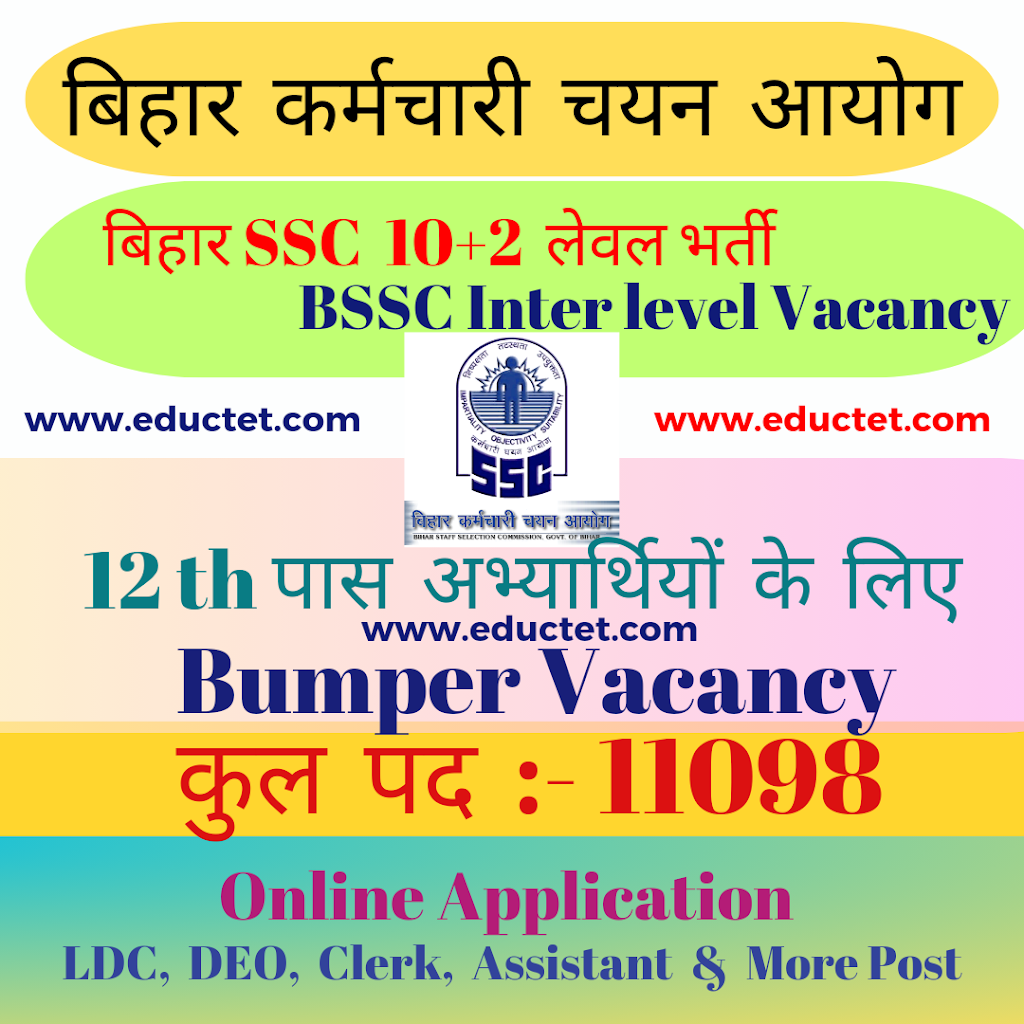
BSSC INTER LEVEL CCE 2023 – POST 11098

Name of the Post  BSSC 2nd Inter Level CCE 2023 Online Form Application Post Date :- 20/09/2023 BSSC Total Vacancy :- 11098 Detail Information :-  Bihar Staff Selection Commission (BSSC) has given a notification for conducting the 2nd inter level combined competitive examination 2023. Those Candidates who are interested in the vacancy detail and completed all eligibility criteria can read the notification and apply online. Exam Fee :- For UR / OBC / PWD / EWS and other state (Male Female) ₹540. For SC / ST / PWD and Bihar state SC / ST (female) ₹ 135. Payment mode :- credit card debit card net banking. For more free detail refer the notification. Important Dates :- Date of Notification :- 19/09/2023 Starting date for Online Application :- 27/09/2023 Last Date for Fee Payment :- 09/11/2023 Last date for Online Apply :- 11/11/2023 Qualification :-  Candidate should passes Intermediate (+12)  Age limit :-  Minimum age limit :- 18 year Maximum age limit for UR (male) :- 37 year Maximum age limit for UR (female) / BC / EBC  (Male/Female) :- 40 years  Maximum age limit for SC / ST Male / Female :- 42 years  Age relaxation is applicable as per role.  Notification provided on official website of BSEB Official website link :- Direct Link of notification link :- Direct Notification Link  Online application start :- Apply Only from 

BSSC INTER LEVEL CCE 2023 – POST 11098 Read More »

Rural Development Agency Announces Exciting Job Opportunities #DRDAJOB #jobalert #latestjob

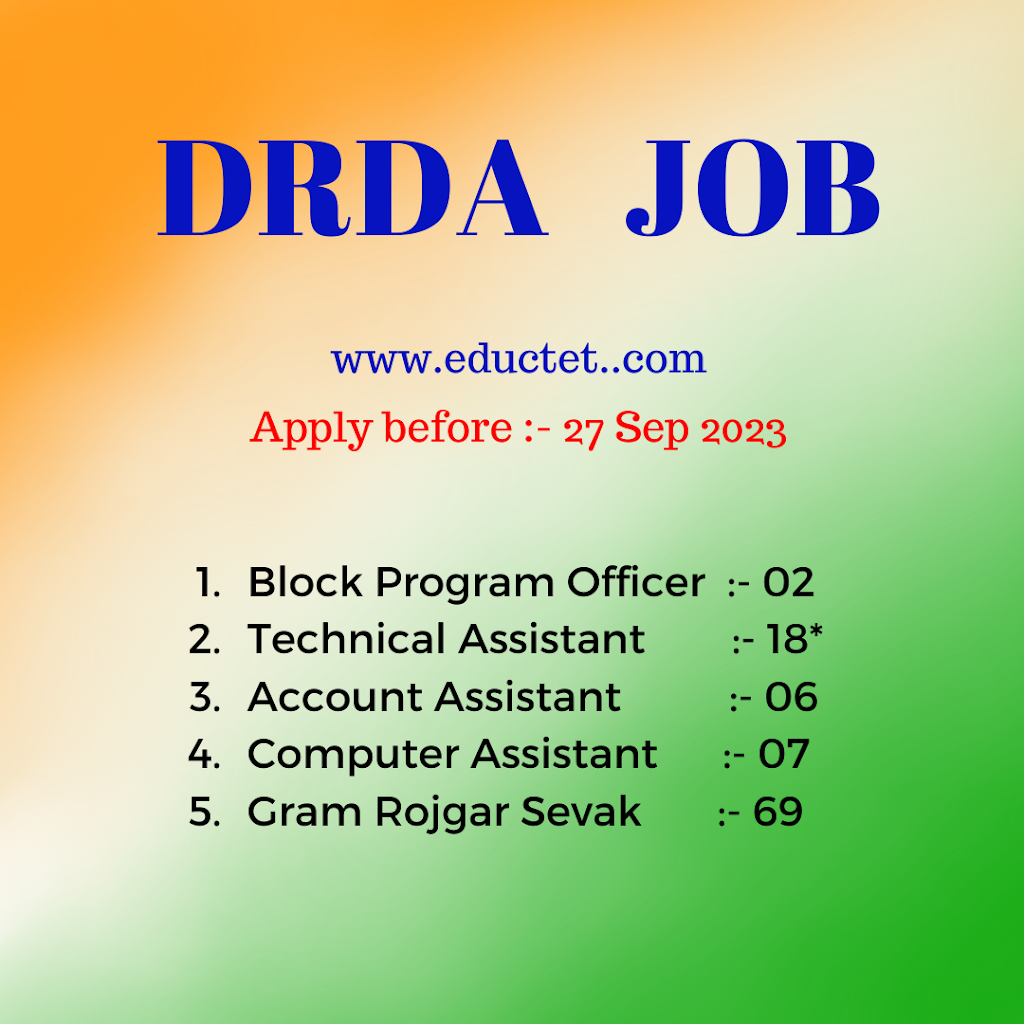
 “Dumka District Rural Development Agency Announces Exciting Job Opportunities” Are you looking for a fulfilling career in the world of rural development? The Dumka District Rural Development Agency (DRDA) has some fantastic news for you! They’ve just released a notification for multiple job openings in various roles, including Block Program Officer, Technical Assistant, Account Assistant, Computer Assistant, and Gram Rojgar Sevak. If you’re passionate about making a positive impact on rural communities and meet the eligibility criteria, then keep reading to find out how you can be a part of this incredible opportunity. 1. Block Program Officer:  No. Of Post :- 02  Eligibility :- Degree (Relevant Discipline) Age :- UR (Male) 18-35 Years , UR (Female) 38 years , SC / ST – 40 Years   As a Block Program Officer, you’ll play a pivotal role in designing and implementing development programs at the grassroots level. Your innovative ideas and dedication will be instrumental in driving positive change in rural areas. 2. Technical Assistant:  No. Of Post :- 05 Eligibility :- B.E / B.Tech (Civil Engg.)  Age :- UR (Male) 18-35 Years , UR (Female) 38 years , SC / ST – 40 Years Equivalent to Junior Engineer No. Of Post :- 13 Eligibility :- Diploma (Civil)  Age :- UR (Male) 18-35 Years , UR (Female) 38 years , SC / ST – 40 Years If you have a technical background and a passion for improving infrastructure and livelihoods in rural regions, this position might be your calling. Join as a Technical Assistant to contribute your expertise in various development projects. 3. Account Assistant: No. Of Post :- 06  Eligibility :- B.Com  Age :- UR (Male) 18-35 Years , UR (Female) 38 years , SC / ST – 40 Years Do numbers and finances excite you? As an Account Assistant, you’ll be responsible for managing financial transactions and ensuring that funds are allocated efficiently to support the agency’s initiatives. 4. Computer Assistant: No. Of Post :-  07 Eligibility :- B.Sc (Computer)  Age :- UR (Male) 18-35 Years , UR (Female) 38 years , SC / ST – 40 Years In today’s digital age, computer literacy is a must. If you have a knack for technology and want to bridge the digital divide in rural areas, consider becoming a Computer Assistant. Your skills will empower rural communities with access to information and services. 5. Gram Rojgar Sevak:  No. Of Post :- 69 Eligibility :- 10th / 12th (Relevant Discipline)  Age :- UR (Male) 18-35 Years , UR (Female) 38 years , SC / ST – 40 Years As a Gram Rojgar Sevak, you’ll be the face of change in rural communities. Your dedication to grassroots development will empower villagers with employment opportunities, transforming their lives for the better. To apply for these positions, make sure you meet the eligibility criteria outlined in the notification. It’s essential to read the notification thoroughly to understand the application process and deadlines.  Direct official Link DRDA 👈🏻👈🏻👈🏻 Full Detail and Application Forms   Working with the Dumka DRDA isn’t just a job; it’s an opportunity to be a catalyst for positive change in rural India. If you’re ready to take on this exciting challenge and contribute to the betterment of our rural communities, don’t miss this chance. The Dumka DRDA is committed to creating a brighter and more prosperous future for our rural areas. Join hands with them in this noble endeavor. Apply today, and let’s work together to make a difference where it matters most. Your journey towards a rewarding career in rural development starts here!

Rural Development Agency Announces Exciting Job Opportunities #DRDAJOB #jobalert #latestjob Read More »

Hindi Diwas Hamari matr bhasha

हिन्दी दिवस: हमारी मातृभाषा का सम्मान प्रस्तावना: हिन्दी, भारत की एकता और विविधता का प्रतीक है। हर साल 14 सितंबर को मनाया जाने वाला हिन्दी दिवस हमें हमारी मातृभाषा की महत्वपूर्ण भूमिका को याद दिलाता है। इस दिन हम हिन्दी की महत्वपूर्ण भूमिका, इसके महत्व, और इसके लिए होने वाले प्रयासों की सराहना करते हैं। हिन्दी का महत्व: 1. भारतीय एकता का प्रतीक:  हिन्दी भारत की सबसे बड़ी और सबसे आवश्यक भाषा है जो देशभक्ति और एकता के प्रतीक के रूप में काम करती है। 2. संस्कृति का आदान-प्रदान:  हिन्दी भाषा हमारे सांस्कृतिक धरोहर का महत्वपूर्ण हिस्सा है और भारतीय संस्कृति की गहरी जड़ों को प्रकट करती है। हिन्दी दिवस का इतिहास: हिन्दी दिवस का चयन विश्वकवि रवींद्रनाथ टैगोर की जन्म जयंती के रूप में हुआ है। टैगोर जी का साहित्य, जिनमें उनकी रचनाएँ हिन्दी में भी हैं, हिन्दी के प्रति उनके समर्पण को प्रमोट करने का संकल्प लेता है। हिन्दी के बचाव में भूमिका: 1. शिक्षा में हिन्दी का प्रयास:  हिन्दी दिवस के दिन, हमें हिन्दी की शिक्षा के प्रति और भी अधिक समर्पित होने का संकल्प लेना चाहिए। 2. जन जागरूकता:  हमें हिन्दी का प्रयोग बढ़ाकर लोगों को अपनी मातृभाषा का सम्मान करने की प्रेरणा देनी चाहिए। निष्कर्ष: हिन्दी दिवस हमें हमारी मातृभाषा के महत्व को समझाने और उसके प्रति समर्पित होने का अवसर प्रदान करता है। हिन्दी हमारी भाषा होने के नाते हमारी अद्वितीय पहचान का हिस्सा है और हमें इसके साथ समर्पित रहना चाहिए। इस दिवस को मनाकर हम अपनी मातृभाषा का गर्व करते हैं और उसके महत्व को प्रमोट करते हैं, ताकि आने वाली पीढ़ियों को भी इसका सम्मान करने का मौका मिल सके। #हिंदी #हिंदी_दिवस #HindiDiwas #Hindi_Diwas #14September 

Hindi Diwas Hamari matr bhasha Read More »

World Ozone Day #Ozone #Ozonelayer #whatisozone #O3

  प्रस्तावना हर साल, 16 सितंबर को पूरी दुनिया विश्व ओज़ोन दिवस का जश्न मनाती है, जिसका मुख्य उद्देश्य धरती पर जीवन को सुरक्षित रखने में ओज़ोन परत के महत्व को उजागर करना है। इस साल का विषय, “मॉन्ट्रियल प्रोटोकॉल: ओज़ोन परत को सुधारना और जलवायु परिवर्तन को कम करना,” है, जो संयुक्त रूप से ओज़ोन परत का उपचार करने और जलवायु परिवर्तन के साथ लड़ने का व्यापक प्रभाव को दिखाता है। ओज़ोन परत को समझना 2023 के विश्व ओज़ोन दिवस के महत्व को समझने से पहले, ओज़ोन परत के महत्व को समझना महत्वपूर्ण है। ओज़ोन परत धरती की स्त्रातोस्फियर का एक क्षेत्र है जिसमें ओज़ोन (O3) मोलेक्यूलों की अधिक संघटन होती है। यह धरती को सूर्य की हानिकारक अल्ट्रा-वायलेट (यूवी) विकिरण से बचाने और उसे फ़िल्टर करने का कार्य करता है। ओज़ोन परत के बिना, जीवन को जो हम जानते हैं, खतरे में होता। मॉन्ट्रियल प्रोटोकॉल: वैश्विक सहयोग का आदर्श इस साल के विश्व ओज़ोन दिवस का विषय मॉन्ट्रियल प्रोटोकॉल पर है, जो 1987 में हस्ताक्षरित एक महत्वपूर्ण अंतरराष्ट्रीय संधि है। प्रोटोकॉल का उद्देश्य ओज़ोन क्षयकरण वस्तुओं के उत्पादन और उपयोग को समाप्त करना था, जैसे कि क्लोरोफ्लोरोकार्बन (सीएफसी) जैसी ओज़ोन खदेड़ने वाली पदार्थ, जो आमतौर पर शीतकालीनदी ग्रीज़न्ट, एयरोसोल प्रोपेलेंट्स, और फ़ोम-ब्लोइंग एजेंट्स में पाए जाते थे। मॉन्ट्रियल प्रोटोकॉल की सफलता विश्व सहयोग क्या प्राप्त कर सकता है, यह दिखाने के रूप में है। ओज़ोन क्षयकरण वस्तुओं के उत्पादन और उपयोग को कम करके प्रोटोकॉल ने केवल ओज़ोन परत का उपचार करने में ही नहीं बल्कि जलवायु परिवर्तन को सामना करने में भी महत्वपूर्ण योगदान किया। मॉन्ट्रियल प्रोटोकॉल का प्रभाव 1. ओज़ोन परत का सुधार: मॉन्ट्रियल प्रोटोकॉल के कार्यान्वयन के बाद से ही ओज़ोन परत का सुधार हो रहा है। वैज्ञानिकों का अनुमान है कि ओज़ोन परत आधी शताब्दी के बीच पूरी तरह से सुधर जाएगी। इसका मतलब है कि सभी जीव जंतुओं के लिए एक सुरक्षित वातावरण। 2. जलवायु परिवर्तन का संघटन:  ओज़ोन क्षयकरण वस्तुओं के उत्पादन और उपयोग कम करके, प्रोटोकॉल ने ग्रीनहाउस प्रभाव को कम करने में मदद की है और इसके परिणामस्वरूप वैश्विक गर्मी कम करने में महत्वपूर्ण योगदान किया है। 3. सार्वजनिक स्वास्थ्य लाभ:  ओज़ोन परत के सुधार के कारण यूवी किरणों के हानिकारक प्रभावों सहित त्वचा कैंसर, कैटरैक्ट, और यूवी किरणों के प्रक्षेपण से संबंधित अन्य स्वास्थ्य समस्याओं के कम मामलों की ओर बढ़ गए हैं। विश्व ओज़ोन दिवस 2023 का जश्न मनाना हम विश्व ओज़ोन दिवस 2023 को मनाते समय प्राप्ति की गई सफलता को पहचानना महत्वपूर्ण है, लेकिन जो काम अब बाकी है, उसे मान्य करना भी महत्वपूर्ण है। मॉन्ट्रियल प्रोटोकॉल की प्रमुखः सफलताओं को महत्वपूर्ण मानने के साथ ही वही चुनौतियाँ भी हैं, जैसे कि मौजूदा ओज़ोन क्षयकरण वस्तुओं का प्रबंधन और नए, संभावित हानिकारक रासायनिक पदार्थों का प्रकट होना। यहां दिखाया गया है कि आप विश्व ओज़ोन दिवस में भागीदार हो सकते हैं और इसे कैसे मना सकते हैं: 1. जागरूकता फैलाएं:  सोशल मीडिया और अपने समुदाय में ओज़ोन परत के महत्व के बारे में जानकारी साझा करें, और विश्व ओज़ोन दिवस 2023 की सफलता की जय-जयकार करें। 2. सततियता प्रशंसा: प्रदूषणकरण न करने वाले उत्पादों और प्रौद्योगिकियों का उपयोग करने की प्रोत्साहना दें, जो ओज़ोन परत को हानि नहीं पहुंचाते। 3. जलवायु क्रियान्वयन में शामिल हों:  ओज़ोन परत को ठीक करने और जलवायु परिवर्तन के साथ जुड़े साथ त्यागों की पहचान करें। अपनी कार्बन पैदा करने की फुटप्रिंट को कम करने के लिए कदम उठाएं। 4. नीति के पक्षधर के लिए प्रचार करें: मॉन्ट्रियल प्रोटोकॉल के सिद्धांतों का समर्थन करने और ओज़ोन परत की सुरक्षा को बढ़ावा देने वाले नीतियों और पहलों का समर्थन करें। निष्कर्षण विश्व ओज़ोन दिवस 2023 एक अद्वितीय सफलता की याद दिलाता है और वैश्विक पर्यावरणीय चुनौतियों को समझने की महत्वपूर्ण बात है। ओज़ोन परत को ठीक करके हम न केवल अपने को हानिकारक यूवी किरणों से बचाते हैं बल्कि जलवायु परिवर्तन के साथ लड़ाई में भी योगदान करते हैं। यह एक दिन है जब हम अपनी प्राकृतिक प्रतिक्रिया और हमारे साथ आने वाले विचारों के लिए समृद्धि के लिए जब हम एक सामान्य उद्देश्य के लिए एक साथ आते हैं, तो हमारे प्लैनेट की प्रतिबद्धता को मनाने का दिन है।l  #OZONE #OZONEDAY #OZONEDAY2023 #OZONEDAYPOSTER #OZONELAYER #OZONELAYERISPRESENT #SAVEOZONE #WORLDOZONEDAY

World Ozone Day #Ozone #Ozonelayer #whatisozone #O3 Read More »

Esay International Day of democracy #15september #Democracy

डेमोक्रेसी के अंतरराष्ट्रीय दिवस का जश्न मनाते हुए: बेहतर दुनिया के लिए आवाजों को सशक्त करने लिए प्रतिबद्ध।  प्रस्तावना: हर साल 15 सितंबर को मनाया जाने वाला अंतरराष्ट्रीय डेमोक्रेसी का दिवस, हमारे ग्लोबल समाज में लोकतांत्रिक मूल्यों और सिद्धांतों के महत्व को याद दिलाने वाला एक महत्वपूर्ण संकेत है। यह दिन लोकतंत्र की महत्वपूर्ण बातों को मनाने का अवसर है, इसके महत्व पर विचार करने का मौका है, और दुनियाभर में लोकतंत्रिक संस्थानों को सुरक्षित रखने और मजबूत करने के प्रति फिर से प्रतिबद्ध होने का मौका है। डेमोक्रेसी के मूल: डेमोक्रेसी की मूल धारा में हर व्यक्ति के फैसलों में भाग लेने के अधिकार के महत्व का मान्य होना शामिल है। इसका मूल तत्व शामिलिता, समानता, पारदर्शिता और जवाबदेही पर आधारित है। इस दिन, हम न केवल इन सिद्धांतों की प्रशंसा करते हैं, बल्कि भिन्न-भिन्न हिस्सों में डेमोक्रेसी के सामाजिक महत्व को भी समझते हैं, और विभिन्न हिस्सों में डेमोक्रेसी को खतरे में डालने वाले चुनौतियों को पहचानते हैं। डेमोक्रेसी के सामाजिक महत्व: डेमोक्रेसी, बिना किसी संकट के नहीं होती है, वे आवाज़ापन की मूल शक्ति को नकारात्मक और सकारात्मक दोनों दिशाओं से पेश करती है। आवाज़ों को सशक्त करना मतलब है सुनिश्चित करना कि हर व्यक्ति को अपने विचार व्यक्त करने, निर्णय-लेने की प्रक्रियाओं में भाग लेने और अपने नेताओं को जवाबदेह रखने का अधिकार है। निष्कर्ष: अंतरराष्ट्रीय डेमोक्रेसी के दिन पर, हम लोकतंत्र के मूल्यों और सिद्धांतों के प्रति अपनी पुनर्निर्मित प्रतिबद्धता को दोहराते हैं। हम यह समझते हैं कि डेमोक्रेसी एक निश्चित गंतव्य नहीं है, बल्कि एक बराबरी और भागीदारी की प्रक्रिया है, जिसकी निगरानी और भागीदारी की लगातार जरूरत है। आवाजों को मजबूत करके, समावेश को गोद लेते हुए और डेमोक्रेसी के सामने आने वाली चुनौतियों को पता करके, हम एक दुनिया की ओर कदम बढ़ा सकते हैं।

Esay International Day of democracy #15september #Democracy Read More »

Polity Important Questions MCQs #ctet #bpsc #biharteacher #bpscteacher

    1. निम्नलिखित में से कौन सा अधिकार मूल अधिकार में शामिल नहीं है ? a) समानता का अधिकार (14 – 18) b) संपत्ति का अधिकार  (31)  c) शिक्षा का अधिकार  (21A) d) शोषण के विरुद्ध अधिकार (23 – 24) 2. भारतीय संविधान में उल्लेखित मूल अधिकारों की विशेषताएं मानी जाती है :- i)  सर्वोच्च न्यायालय द्वारा संरक्षण प्राप्त । ii) यह अत्यंतिक नहीं है अपितु इन पर युक्ति युक्त निर्बचन लगाए गए हैं । iii) यह व्यक्ति के भौतिक और नैतिक विकास हेतु आवश्यक है । iv) मूल अधिकारों में परिवर्तन के लिए संविधान संशोधन की आवश्यकता होती है। विकल्प :-  a) i , ii , और iii b) ii और iv c) केवल 2 d) उपर्युक्त सभी  3. संवैधानिक उपचारों का अधिकार निम्न में से किस अनुच्छेद के तहत प्राप्त है ? a) अनुच्छेद 21  b) अनुच्छेद 32  c) अनुच्छेद 22  d) अनुच्छेद 24 4. भारतीय संविधान का मैग्नाकार्टा (महाअधिकार पत्र) संविधान के किस भाग को कहा जाता है ?   a) भाग 4  b) भाग 2  c) भाग 3  d) भाग 1 5. प्राण एवं दैहिक स्वतंत्रता के अधिकार का उल्लेख किस अनुच्छेद में है ? a) अनुच्छेद 20  b) अनुच्छेद 21  c) अनुच्छेद 19  d) अनुच्छेद 22 6. अनुच्छेद 25 के संदर्भ में निम्नलिखित कथनों पर विचार कीजिए  i) हिंदू शब्द में जैन सिख व बौद्ध संबंधत है ii) सिखों को कृपाण धारण करने का अधिकार है iii) इसके अंतर्गत मूल अधिकारों के रूप में धार्मिक शिक्षा व धर्मांतरण की बात कही गई  iv) अंतःकरण की स्वतंत्रता प्राप्त है  उपयुक्त कथन में से कौन सा / कौन से सही है? विकल्प :-  a) केवल 2 b) केवल 2 और 3 c) केवल 1, 2 और 4  d) उपरोक्त सभी 7. 44वे संविधान संशोधन द्वारा किस अधिकार को मूल अधिकार की श्रेणी से हटकर एक विधिक अधिकार बनाया गया है ?  a) समानता का अधिकार  b) स्वतंत्रता का अधिकार  c) संपत्ति का अधिकार  d) शिक्षा का अधिकार 8. 6 से 14 वर्ष के बच्चों को अनिवार्य और निशुल्क शिक्षा के अधिकार/दायित्व का किस संविधान संशोधन द्वारा मौलिक अधिकार में जोड़ा गया ? a) 42वें संविधान संशोधन , 1976  b) 44वे संविधान संशोधन , 1978  c) 86वे संविधान संशोधन , 2002  d) 97वे संविधान संशोधन , 2011  9. निम्न में से प्रांत है जहां हिंदू अल्पसंख्यक है ?  a) जम्मू कश्मीर, असम ,गोवा ,त्रिपुरा ,नागालैंड, केरल ,हरियाणा b) जम्मू कश्मीर पंजाब नागालैंड मेघालय मिजोरम अरुणाचल प्रदेश लक्षद्वीप  c) जम्मू कश्मीर पंजाब केरल हरियाणा नागालैंड झारखंड  d) पंजाब जम्मू कश्मीर असम त्रिपुरा केरल मिजोरम हरियाणा  10. “जनहित याचिका” (PIL)  का जनक किसे माना जाता है ? a) विवेक काटजू  b) जस्टिस खेहर  c) पी एन भगवती . d) मार्कण्डेय काटजू  11. निम्नलिखित में से किस अनुच्छेद के तहत उच्चतम व उच्च न्यायालय को रिट जारी करने का क्रमशः अधिकार / शक्ति प्राप्त है ?  a) अनुच्छेद 222 व 32  b) अनुच्छेद 32 व 226  c) अनुच्छेद 36 व 226  d) अनुच्छेद 30 व 226  12. भारतीय दंड संहिता (IPC) की किस धारा के अनुसार आत्महत्या के प्रयास को दंडनीय अपराध माना गया है ? a) धारा 306  b) धारा 308  c) धारा 307  d) धारा 309  13. बंदी प्रत्यक्षीकरण किन व्यक्तियों को प्राप्त नहीं है ? a)  निवारण नजरबंदी में गिरफ्तार व शत्रु देशीय  b) शत्रु देशीय व मित्र देशीय  c) आतंकवादी व मित्र देशीय  d) भारतीय व शत्रु देशीय 14. न्यायिक पुनर्विलोकन (Judicial Review) की शक्ति किन अनुच्छेदों में अंतर्निहित है ? a) 13, 226, 236 b) 13, 226, 237  c) 32, 33, 226 d) 13, 32, 226  15. भारतीय संविधान का कौन सा अनुच्छेद अस्पृश्यता का उन्मूलन करता है और किसी भी रूप में इसके आचरण का निषेध करता है ? a) अनुच्छेद 16  b) अनुच्छेद 17  c) अनुच्छेद 18  d) अनुच्छेद 15  16. अनुसूचित जाति तथा अनुसूचित जनजाति को किस अनुच्छेद के अंतर्गत मौलिक , सामाजिक-आर्थिक , राजनीतिक तथा सांस्कृतिक अधिकार दिया गया है ?  a) अनुच्छेद 20  b) अनुच्छेद 19  c) अनुच्छेद 18  d) अनुच्छेद 17   17. निम्नलिखित युग्म में से कौन सा सही सुमेलित नहीं है ? a)  मानव के दूर व्यवहार तथा बलात श्रम का निषेध – अनुच्छेद 23  b) अल्पसंख्यक वर्गों के हितों का संरक्षण – अनुच्छेद 29  c) संवैधानिक उपचारों का अधिकार – अनुच्छेद 32  d) शिक्षा संस्थाओं की स्थापना तथा प्रशासन करने का अल्पसंख्यक वर्गों का अधिकार अनुच्छेद 31 . 18. भारतीय संविधान के अंतर्गत निम्नलिखित में से किस मूल अधिकारों का संरक्षक समझा जाता है ?  a) संसद को  b) राष्ट्रपति को  c) न्यायपालिका को  d) प्रधानमंत्री को 19. संविधान के अनुच्छेद 25 के अनुसार धर्म स्वतंत्रता का अधिकार किसके अधीन नहीं है ?  a) सार्वजनिक व्यवस्था  b) स्वास्थ्य  c) सदाचार  d) मानववाद . 20. निम्नलिखित में से किस आधार के कारण नागरिक की विचार एवं अभिव्यक्ति की स्वतंत्रता पर प्रतिबंध नहीं लगाया जा सकता ? a) भारत के संप्रभुता  b) न्यायपालिका का अपमान  c) लोक व्यवस्था  d) अवांछनीय आलोचना  Answer b) संपत्ति का अधिकार  (31) d) उपर्युक्त सभी  b) अनुच्छेद 32 c) भाग 3 b) अनुच्छेद 21  c) केवल 1, 2 और 4 c) संपत्ति का अधिकार  c) 86वे संविधान संशोधन , 2002  b) जम्मू कश्मीर पंजाब नागालैंड मेघालय मिजोरम अरुणाचल प्रदेश लक्षद्वीप  c) पी एन भगवती  b) अनुच्छेद 32 व 226 d) धारा 309  a)  निवारण नजरबंदी में गिरफ्तार व शत्रु देशीय  d) 13, 32, 226  b) अनुच्छेद 17  d) अनुच्छेद 17  d) शिक्षा संस्थाओं की स्थापना तथा प्रशासन करने का अल्पसंख्यक वर्गों का अधिकार अनुच्छेद 31  c) न्यायपालिका को  d) मानववाद  d) अवांछनीय आलोचना .

Polity Important Questions MCQs #ctet #bpsc #biharteacher #bpscteacher Read More »